
By Zach Doell, Contributing Editor kbb.com
There are a number of things that come to mind when shopping for a used car. For instance, how much will it cost? How high is the mileage? How does the car look? Markedly absent from that list is the subject of tires -- the things that actually attach your vehicle to the road.
Tires affect a vehicle's braking, handling, comfort, and fuel economy. When buying a used car, it can pay dividends to take a closer look at the tires. This quick inspection can save you money in the long run and tell you a little bit more about the life that vehicle has lived.
Tread Depth
First and foremost, you'll want to make sure there's enough tread left -- too little and a vehicle's handling could be severely compromised in wet or snowy conditions. Knowing how much tire tread remains can help in negotiating a lower price for a used car. In most states, tires that have 2/32 inches of tread legally need to be replaced.
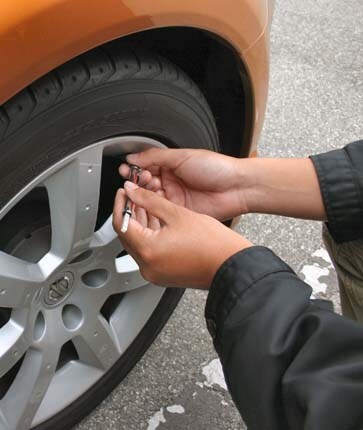
Tread depth gauges (available at many auto parts stores) offer a simple and inexpensive way to accurately measure wear. There are also tread depth indicator bars built into a tire's grooves themselves. When these become flush with the raised tread, it's time to replace.
Oddly enough, the old "Lincoln's head" penny trick is applicable as well. Simply stick a penny upside down in the tread groove and if all of Lincoln's head is visible, your tires have less than 2/32 inches of tread depth left.
Uneven Wear
As they accumulate mileage, tires wear and tread depth diminishes-that's natural. What you don't want to see is uneven wear across the surface of the tire, as this suggests the vehicle may have a mechanical problem or that it hasn't been properly maintained.
"Tires don't wear unevenly for no reason," says Bob Abram, product planning manager at Yokohama Tire Corporation. He explains that uneven tire wear can be the result of an improper alignment, suspension or drivetrain problems, and may indicate that the previous owner neglected to rotate the tires. The National Highway Traffic Safety Administration (NHTSA) suggests rotating tires every 5,000 to 8,000 miles or sooner if uneven wear begins to occur.
There's also the issue of inflation. Under-inflated tires tend to wear prematurely on the tread's outer edges, while over-inflated tires develop wear on the tread's centerline. Under-inflation also contributes more rolling resistance, which adversely affects fuel economy. NHTSA estimates cite a one percent drop in fuel economy for every 2.96 psi of under-inflation.
"Tires are designed to function at a certain pressure, given the weight of a vehicle," says Abram. "When you remove that pressure, the amount of weight a tire can effectively hold decreases. It heats up faster, wears out faster, and can compromise handling."
Proper Size and Type
When inspecting a used car, make sure to check if all four tires are of the same type and size. Mismatched tires are a red flag regarding a vehicle's history and experts warn that mixing tire types jeopardizes a vehicle's handling because of different compounds and tread patterns.
Federal law requires that all passenger vehicles since 2003 feature placards, either in the driver's side doorjamb or on the door, that display each vehicle's standard tire size and pressure information. These numbers should be used to crosscheck the specifications written on a tire's sidewall, which also include load and speed ratings.
"If a tire is too small, it won't properly hold the weight of the vehicle and it presents a safety concern," says Abram. "If a car has a different size tire than what the manufacturer or retailer says, you should ask a question."
Some car dealerships may go as far as replacing used tires with new ones. While this increases a vehicle's perceived value, dishonest sellers may do this to disguise a car's faults.
Tire Age and Condition
Older tires may exhibit hairline cracks or bulges in the sidewall and tread as a result of UV, sunlight, and environmental exposure like extreme heat or cold. If you see these telltale signs, as well as patches or cuts, that car is going to need some new rubber.
The NHTSA suggests drivers check the owner's manual regarding replacement recommendations, and refers to automakers and tire manufacturers for their own guidance. Automakers generally suggest replacement after six years of use on a vehicle, and tire manufacturers draw the line at 10 years of age. Why the difference? Tires may sit in a retailer's warehouse for a year or two after manufacture beforeC being fitted to a vehicle.
"The vehicle manufacturers' guidance of six years means six years in service without consideration for the date code on the tire," clarifies George Soodoo, chief of the NHTSA's Vehicle Dynamics Division, "which means six years from the time the vehicle was purchased, if new, or six years from the time you install the tire on the vehicle."
Look up the date
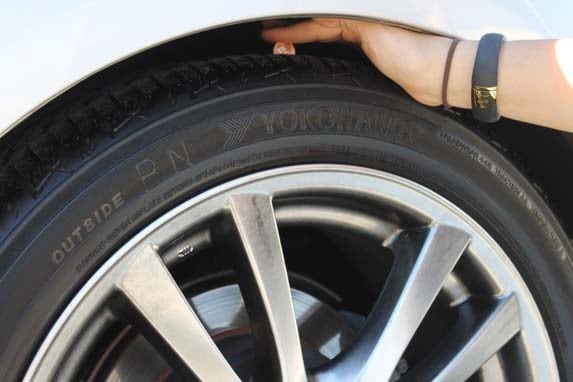
To determine the exact age of a tire, look on its sidewall for a code beginning with "DOT." The last four digits of this sequence represent the week of manufacture followed by the year. For instance, "0713" would mean the seventh week of 2013. Tires manufactured prior to 2000 use a three digit code-two digits signifying the week and the last signifying the year within a decade.
It's best to err on the side of caution when looking at tires that exceed the six year figure on a used car...and don't forget to check the spare too. Over time, spare tires can be "baked" in hot trunks or exposed to the elements underneath a vehicle.
While important and indicative of a car's previous history, tires represent one piece of a larger used vehicle puzzle. Regular engine, transmission, and brake maintenance are among the many other key components of a well-rounded used car. As always, it pays to research a used car's background with a vehicle history report and have it inspected by a trusted mechanic.


