Showing posts with label Honda. Show all posts

Saturday, October 24, 2015

Honda to Exhibit World Premiere of the Reinvigorated NC750X and 400X at the 44th Tokyo Motor Show 2015


Honda Motor Co., Ltd. today announced it will exhibit the world premiere of the NC750X and 400X with reinvigorated exteriors and refined componentry, at the 44th Tokyo Motor Show 2015, to be held at Tokyo Big Sight (press days:October 28-29)(press days:2015)(public days:October 30 - November 8)(public days:2015).
The NC750X and 400X sports models, developed according to Honda's "Crossover Concept" fusing on-road and off-road values at a high dimension, are popular with a wide spectrum of customers.
Both world premiere models sport reinvigorated exterior designs, including all-LED head- and tail-lights. The newly designed windscreen efficiently provides wind protection for the rider, ensuring a stylish and comfortable ride.
NC750X Features
- LED headlights(1) and taillights enhance the NC750X's adventurous image with a sharper styling.
- 70mm taller windscreen - compared to previous model - decreases rider fatigue during high-speed cruising.
- The newly-designed compact and lightweight atypical cross-section mufflers contribute to improved maneuverability, while producing a rich beat.
- Luggage capacity has been increased from 21 liters to 22 liters, for more luggage storage.
- The Dual Clutch Transmission (DCT) is programmed with 3 S-mode levels, allowing the rider to select optimum gear shifts.
- The front suspension is equipped with dual-bending valves(1) which optimize linear compression and decompression damping characteristics, improving ride comfort.
- The rear cushions are newly equipped with preload adjuster.(1)
Honda plans to release the new NC750X in Japan and Europe, and in North America as the NC700X.
400X Features
- Developed according to Honda's "FEEL THE ADVENTURE FORM" concept, LED head- and tail-lights enhance the 400X's masculine look.
- 100mm taller windscreen - compared to previous model - provides even more wind protection for the rider.
- The front suspension is equipped with preload adjusters.
- Brake lever adjustable to fit hands of varying sizes.
- Gear shift mechanism redesigned to improve operation feel.
Honda plans to release the reinvigorated 400X in Japan, and in Europe, North America and Asia as the CB500X.
(1) Equipped on Japanese and European models. Not available for North American models and some other regions.
About Honda
Honda Motor Co., Ltd. is one of the leading manufacturers of automobiles and power products and the largest manufacture of motorcycles in the world. Honda has always sought to provide genuine satisfaction to people worldwide. The result is more than 120 manufacturing facilities in 30 countries worldwide, producing a wide range of products, including motorcycles, ATVs, generators, marine engines, lawn and garden equipment and automobiles that bring the company into contact with over 19 million customers annually. For more information, please visithttp://world.honda.com.

Thursday, October 22, 2015

Buying a Used Car? Check the Tires


By 
There are a number of things that come to mind when shopping for a used car. For instance, how much will it cost? How high is the mileage? How does the car look? Markedly absent from that list is the subject of tires -- the things that actually attach your vehicle to the road.
Tires affect a vehicle's braking, handling, comfort, and fuel economy. When buying a used car, it can pay dividends to take a closer look at the tires. This quick inspection can save you money in the long run and tell you a little bit more about the life that vehicle has lived.

Tread Depth
First and foremost, you'll want to make sure there's enough tread left -- too little and a vehicle's handling could be severely compromised in wet or snowy conditions. Knowing how much tire tread remains can help in negotiating a lower price for a used car. In most states, tires that have 2/32 inches of tread legally need to be replaced.
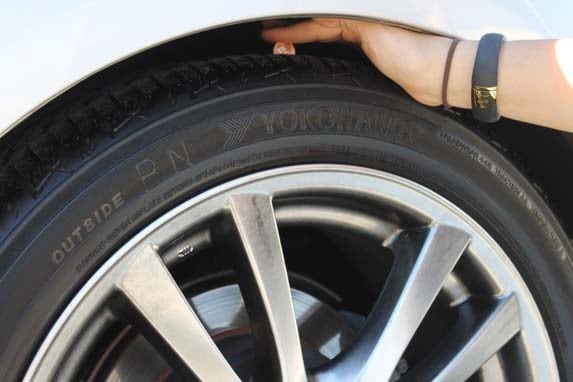
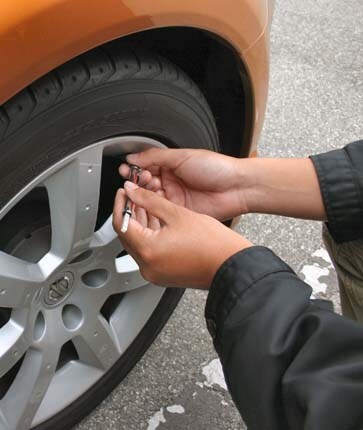
Tread depth gauges (available at many auto parts stores) offer a simple and inexpensive way to accurately measure wear. There are also tread depth indicator bars built into a tire's grooves themselves. When these become flush with the raised tread, it's time to replace.
Oddly enough, the old "Lincoln's head" penny trick is applicable as well. Simply stick a penny upside down in the tread groove and if all of Lincoln's head is visible, your tires have less than 2/32 inches of tread depth left.
Uneven Wear
As they accumulate mileage, tires wear and tread depth diminishes-that's natural. What you don't want to see is uneven wear across the surface of the tire, as this suggests the vehicle may have a mechanical problem or that it hasn't been properly maintained.
"Tires don't wear unevenly for no reason," says Bob Abram, product planning manager at Yokohama Tire Corporation. He explains that uneven tire wear can be the result of an improper alignment, suspension or drivetrain problems, and may indicate that the previous owner neglected to rotate the tires. The National Highway Traffic Safety Administration (NHTSA) suggests rotating tires every 5,000 to 8,000 miles or sooner if uneven wear begins to occur.
There's also the issue of inflation. Under-inflated tires tend to wear prematurely on the tread's outer edges, while over-inflated tires develop wear on the tread's centerline. Under-inflation also contributes more rolling resistance, which adversely affects fuel economy. NHTSA estimates cite a one percent drop in fuel economy for every 2.96 psi of under-inflation.
"Tires are designed to function at a certain pressure, given the weight of a vehicle," says Abram. "When you remove that pressure, the amount of weight a tire can effectively hold decreases. It heats up faster, wears out faster, and can compromise handling."
Proper Size and Type
When inspecting a used car, make sure to check if all four tires are of the same type and size. Mismatched tires are a red flag regarding a vehicle's history and experts warn that mixing tire types jeopardizes a vehicle's handling because of different compounds and tread patterns.
Federal law requires that all passenger vehicles since 2003 feature placards, either in the driver's side doorjamb or on the door, that display each vehicle's standard tire size and pressure information. These numbers should be used to crosscheck the specifications written on a tire's sidewall, which also include load and speed ratings.
"If a tire is too small, it won't properly hold the weight of the vehicle and it presents a safety concern," says Abram. "If a car has a different size tire than what the manufacturer or retailer says, you should ask a question."
Some car dealerships may go as far as replacing used tires with new ones. While this increases a vehicle's perceived value, dishonest sellers may do this to disguise a car's faults.
Tire Age and Condition
Older tires may exhibit hairline cracks or bulges in the sidewall and tread as a result of UV, sunlight, and environmental exposure like extreme heat or cold. If you see these telltale signs, as well as patches or cuts, that car is going to need some new rubber. 
The NHTSA suggests drivers check the owner's manual regarding replacement recommendations, and refers to automakers and tire manufacturers for their own guidance. Automakers generally suggest replacement after six years of use on a vehicle, and tire manufacturers draw the line at 10 years of age. Why the difference? Tires may sit in a retailer's warehouse for a year or two after manufacture beforeC being fitted to a vehicle.
"The vehicle manufacturers' guidance of six years means six years in service without consideration for the date code on the tire," clarifies George Soodoo, chief of the NHTSA's Vehicle Dynamics Division, "which means six years from the time the vehicle was purchased, if new, or six years from the time you install the tire on the vehicle."
Look up the date
To determine the exact age of a tire, look on its sidewall for a code beginning with "DOT." The last four digits of this sequence represent the week of manufacture followed by the year. For instance, "0713" would mean the seventh week of 2013. Tires manufactured prior to 2000 use a three digit code-two digits signifying the week and the last signifying the year within a decade.
It's best to err on the side of caution when looking at tires that exceed the six year figure on a used car...and don't forget to check the spare too. Over time, spare tires can be "baked" in hot trunks or exposed to the elements underneath a vehicle.
While important and indicative of a car's previous history, tires represent one piece of a larger used vehicle puzzle. Regular engine, transmission, and brake maintenance are among the many other key components of a well-rounded used car. As always, it pays to research a used car's background with a vehicle history report and have it inspected by a trusted mechanic.

Thursday, July 16, 2015

CARS NEWS 2015 Honda CR-Z: 3 Hidden Features You Are Not Aware Of

It seems that the latest Honda CR-Z is the only car that invites you to go green while also keeping you thrilled thanks to the 6-speed manual transmission. Perhaps, this best explains why the Honda CR-Z is really popular in the world.
If you are among the many CR-Z owners, we are going to reveal to you three features on the car which you might not be aware of. All three features are unique and they could change the way you view the CR-Z. 


If you are ready, the three features are as follow:

  1. Turning on the air-conditioner will automatically open a flap inside the glove box for cool air to flow. This feature basically allows the drivers to keep their bottled water cooled.
  2. When Start/Stop is active and the engine is switched off, floor the gas pedal and the clutch to keep the engine idling for the duration of the stop.
  3. Every CR-Z comes with a privacy shade in the trunk. The shade has a mounting spot on the floor and using it will turn the feature into a divider in the cargo area.

Monday, December 22, 2014

Five Habits that will Ruin your Vehicle | Maita Honda


Avoiding these habits can go a long way in preventing an expensive repair bill.

Most things you own will last longer if you take care of them and treat them well. Your car is no exception to this rule. While neglecting your car may seem harmless in the short term, regular neglect and mistreatment will add up and will reduce your car’s lifespan. To keep your car running longer and stronger, avoid these five harmful habits.

1. Delaying regular maintenance
Regularly maintaining your car is vital to your car’s longevity. Regular maintenance includes oil and filter replacement, as well as transmission fluid, air filter and brake pad care. Every vehicle manufacturer specifies a different maintenance routine, which can be found in your owner’s manual. While regular maintenance requires you to invest some time and money, it’s peanuts compared to the cost of a new engine or transmission.

2. Ignoring dash warning lights
When a warning indicator lights up on your dash panel, it’s important to address the problem immediately. If you don’t know what the light means, check your owner’s manual or call your mechanic. Dash warning lights can alert you to some very serious problems, such as a coolant leak, which can cause your engine to overheat. A simple preventative repair can often prevent a large problem down the line.

3. Shifting while moving
The transmission is one of the most complex and expensive parts in your car and it’s important to use is as it was intended. Be careful not to shift from drive to reverse or vice versa while the car is still moving. This “jerky” shifting places excess strain on the transmission’s internal gears and can instantly destroy it.

4. Jerky driving
We all know someone who accelerates wildly on every straightaway only to brake hard at a traffic light or stop sign. This type of driving won’t destroy your car immediately, but will cause your engine, transmission and brake system to deteriorate much more quickly than intended. Cars that have been abused will have premature fluid leaks, broken seals and mechanical problems.

5. Putting off tire replacement
Tires for some cars can be expensive, so replacing them is an unwelcome cost. Driving on bald tires is very risky, however. If a tire blows out while you’re driving, you can lose control of your vehicle and have a serious accident. And if you drive with bald tires in the rain, the risk of hydroplaning goes up tremendously. A new set of tires may seem pricey, but probably costs less than your car, and even less than your insurance deductible.

Monday, November 17, 2014

Honda Named Most Trusted Brand & Overall Brand by KBB.com | Maita Honda

BIA_2013-darkbg-landscape


Honda has been named the “Most Trusted Brand” three straight years and “Best Overall Brand” for a second consecutive year.

“A brand is really built over the long haul through consumers’ experiences with its products, and Honda is committed to delivering class-leading vehicles that provide lasting enjoyment and value to our customers,” said Jeff Conrad, senior vice president and general manager of the Honda automobile division for American Honda. “Honda simply embraces the challenge of being a brand that people can trust.”

Once again, new-car shoppers have recognized the Honda brand as “Most Trusted Brand” and “Best Overall Brand” for Kelley Blue Book’s 2014 Brand Image Awards. KBB’s 2014 Image Awards are based on consumer data derived from the Kelley Blue Book Market Intelligence Brand Watch study. Brand Watch is an online brand and model study that taps into over 12,000 in-market-new-vehicle shoppers every year onKBB.com. This in-depth study offers an observation on how shoppers perceive certain factors driving their auto purchase decisions, and captures brand loyalty and familiarity data among shoppers. Honda secured the highest average score across all non-luxury models for the “Best Overall Non-Luxury Brand” title.

“The fact that Honda has again won the Kelley Blue Book Brand Image Awards as Best Overall Brand and Most Trusted Brand comes as no surprise,” said Jack R. Nerad, executive editorial director and executive market analyst for Kelley Blue Book. “Our experience has indicated that consumers continue to both respect Honda vehicles and be enthusiastic about them. Honda’s reputation for quality, reliability and fun-to-drive continues to resonate with buyers of all ages.”

We aim to match match these standards as your trusted Honda dealer. Rest assured that with Maita Honda we will work to help you find the vehicle you want, paired with the service and attention you deserve. Browse NEW Honda inventory here and schedule your test drive today!

Wednesday, September 17, 2014

2015 Honda Pilot Safety Features


2015 Honda Pilot accessories
Thanks to its outstanding crash test safety ratings and advanced engineering, the 2015 Honda Pilot is one of the safest sport utility vehicles currently on the market. Available right here in Boulder at Fisher Honda, one of the most notable things about this car are the 2015 Honda Pilot safety features! Let’s explore what these features are capable of and what they have to offer for passengers.

Honda Pilot Body Design

Built using the Advanced Compatibility Engineering (ACE) structure, the 2015 Honda Pilot was designed to effectively distribute crash energy throughout the front end of the vehicle by crumpling in all the right areas. This helps to prevent occupants from absorbing said energy and reduces the overall risk of injury. The ACE structure also helps avoid transferring that crash energy to other vehicles in the event of a multi-car collision.

Vehicle Stability Control

In order to help the driver maintain full control of the 2015 Honda Pilot, this vehicle comes equipped with a standard vehicle stability assist system and traction control. If there is an under or oversteer situation detected, this system will actively engage to help you return to your intended course and avoid a potentially hazardous situation. The traction control aspect is incredibly helpful during slippery road conditions as well.

Three Rows of Side Curtain Airbags

Standard for all three rows of seats, the 2015 Honda Pilot safety features includes side curtain airbags with a built-in rollover sensor. No matter what sort of accident situation occurs with this vehicle, these side curtain airbags are designed to provide optimum protection for all passengers, even in the event of a rollover.

Backup Camera

For added visibility when reversing out of a tight parking spot, the 2015 Honda Pilot is outfitted with a standard rearview backup camera. The image from this camera is displayed in high resolution on the standard 8-inch infotainment screen and features guidelines to help you determine the distance an object is from the back of the new Honda Pilot. This will help you avoid making contact with other vehicles as well.

The 2015 Honda Pilot Safety Features are Top-Notch

To explore the all-new Honda Pilot and the safety features it has to offer at your local Boulder Honda dealer, contact Maita Honda at 6025 Arapahoe Road in Boulder to take one out for a test drive!

Monday, August 25, 2014

Find Out What Type of Brakes Your Car Has and How To Maintain them


Learn how to maintain the brakes on your car and stay safe


Find Out What Kind of Brakes You Have

For the past few decades there have been only 2 predominant types of brakes, disc brakes and drum brakes. They work in essentially the same way, and symptoms of a worn system are often identical.

Drum Brakes

Drum brakes predate disc brakes by many years, but they are still a reliable and affordable braking technology. However, because drum brakes do not dissipate heat as well as disc brakes, they are often only found on the rear two wheels of vehicles. Drum brakes essentially consist of two rounded brake shoes housed inside a round drum that spins with the wheels of a vehicle. When the brake pedal is applied, fluid pushes the two brake pads out against the drum where they create friction and slow the vehicle.

Disc Brakes

A car’s disc brakes work much like those of a motorcycle or bicycle. A caliper that houses two brake pads is mounted over a thin disc shaped rotor. The rotor spins with the wheels while the brake caliper remains stationary. When the brake pedal is applied, the two brake pads in the caliper squeeze the rotor to create friction and slow the vehicle. Check out the two diagrams from CarBibles below to see the difference between drum and disc brakes visually.
Drum Brake DiagramDisc Brake Diagram


Maintaining Your Car’s Brakes

Fortunately, drum and disc brake systems should go many thousands of miles without any trouble. Keep an eye on brake fluid and inspect your brake pads every 12,000 miles or so. If the pads are less than 1/8 inch thick consider replacing them. Otherwise, just keep an eye out for unusual behavior that could indicate a problem.
Worn Disc Rotor
A Worn Disc Rotor

Detecting a Problem With Your Brakes

The importance of your brakes cannot be overstated, if you experience these symptoms have your brakes inspected.
  •  Strange sounds when braking
  • Your car “pulls” to the left or right when driving
  • Vibrations when applying the brakes
  • A “mushy” or inconsistent brake pedal
  • Noticeable grooves in the rotors
  • Strange smells

Have Maita Honda Inspect Your Car’s Brakes

Hopefully you aren’t experiencing any of these warning signs of brake problems, but if you are, do something about it as soon as possible. Brake problems don’t fix themselves, and letting these problems persist could lead to an accident. Let the mechanics you trust at Maita diagnose your brake troubles and drive safely.

Honda Engineers Are Dedicated to Keeping You Safe in a 2015 Honda Fit

The 2015 Honda Fit is an IIHS “Top Pick”

Crash test ratings are something of a bittersweet subject; we don’t want to be reminded of the dangers associated with driving, but we do want to know how safe the cars we drive are. The reality is that even if you are the safest driver in the world, you can’t control other drivers who may not be, especially with all the distractions that are commonplace in our modern lives. Because of this, Honda takes crash test ratings very seriously, and you should too.

The Insurance Institute For Highway Safety Small Overlap Frontal Test

IIHS small overlap Test
The Small Overlap Test
Because a frontal crash is the most dangerous type, the IIHS conducts several frontal crash tests. In 2012 they introduced the small overlap frontal test to drive further improvements in car safety. This test replicates a frontal collision where the front corner of a vehicle makes contact with another vehicle or object. Because car occupants are move forwards and to the side in a crash of this nature it is a very dangerous crash and challenging for automakers to excel at. When the IIHS conducts this test, the vehicles travel at 40 miles per hour towards a 5 foot tall rigid barrier, only 25% of the total width of the vehicle strikes the barrier. You can learn more about how the Insurance institute for Highway Safety conducts these tests here.

Testing the 2015 Honda Fit Against the Small Overlap Frontal Crash Test

2105 honda fit crash
The 215 Honda Fit Crash Test
Initially Honda engineers were disappointed when the 2015 Fit received a substandard grade on the IIHS small overlap frontal test. Honda engineers prepared the 2015 Fit for this test specifically to meet Honda’s rigorous safety expectations. However, even with these preparations, a steel bumper designed to absorb impact broke loose during the crash test allowing too much crash energy to be absorbed by the driver’s side of the vehicle. This was simply unacceptable for Honda

Improving the 2015 Honda Fit’s Crash test Rating

Honda did something unusual when it received a “marginal” rating on the small front overlap test. Even though the 2015 Fits were due to hit showrooms right away, Honda went into overdrive and re-engineered the front bumper of the 2015 Fit. When Honda asked the IIHS to re-test the 2015 Fit, the score improved to “acceptable.” While that might not sound like the most encouraging rating, it brought the 2015 Fit’s overall safety rating up to a “Top Pick” by the IIHS. A “Top Safety Pick” overall title is the second highest rating that the IIHS awards, pretty spectacular for such a small vehicle.

Feel Safe in a 2015 Honda Fit from Fisher Honda

When making car purchase decisions many buyers consider safety, and small cars are often looked at with skepticism. Despite a tiny footprint, the 2015 Honda Fit has proven itself to be an incredibly safe vehicle. Check out our inventory of 2015 Honda Fit’s and drive away with the space and safety of a large vehicle, while enjoying the sport feel and fun of a small hatchback.